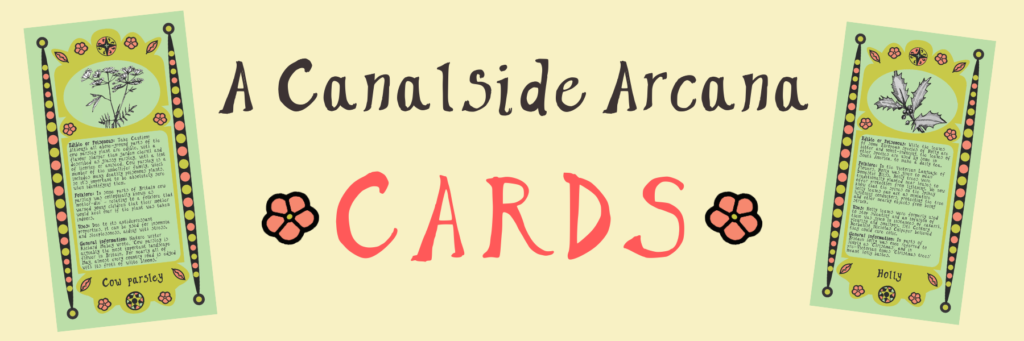
An Introduction to A Canalside Arcana
Canals are wonderfully abundant nature reserves, travelling the length and breadth of the country, acting as a green and blue corridor and a habitat for many species of plants. A Canalside Arcana aims to celebrate the nature on our doorstep and invites you to self-guide a walk along the canal, and see how many of the common plant species you can spot. Though the card pack has been prepared specifically for the stretch of the Caldon Canal in Stoke-on-Trent, which runs between Etruria and Hanley Park, the cards can be used elsewhere too, to begin to uncover the secrets and magic of plants living on the cut.
Arcana means specialized knowledge that is mysterious to the uninitiated. It comes from Latin arcānus, meaning ‘hidden, secret.’
Each year the RSPB produce the State of Nature Report, which tells us worrying news about the decline of our flora. Since 1970 more than half of our flowering plants, mosses and their relatives have been lost from areas where they used to thrive. 54% of flowering plants and 59% of bryophytes (mosses and their relatives: liverworts and hornworts) across Great Britain have decreased in where they are found.
The urgency then, to understand and appreciate the importance of our Plant Ecologies has never been more pressing.
If you are leading a walk for others along the canal, the cards can be used as a resource to share the stories and traditional uses of these amazing plants and can act as a talking point to get to know the amazing flora on our doorstep.
Please be advised that though plants may be described as having culinary uses, there are plants which can be very poisonous or can create an irritant on the skin, which might look very much like other harmless species – do not to eat anything unless you are 100 per cent sure that it is not poisonous.
A Canalside Arcana is a project by artist Anna Francis which aims to draw attention to the plant life and biodiversity of one of Stoke-on-Trent’s important waterways, through the creation of an artwork and trail which reveals the secret folk stories, uses and biological information about the plants, flowers and trees living alongside the Caldon Canal. This project was commissioned by Appetite and Canal & River Trust.
Now that we have begun to notice, what other plants can we get to know, and how can we become their guardians?
A Canalside Arcana A to Z
Bramble
Edible or Poisonous: One of the earliest known instances of blackberry consumption comes from the remains of the Haraldskær Woman, the naturally preserved bog body of a Danish woman dating from approximately 2,500 years ago.
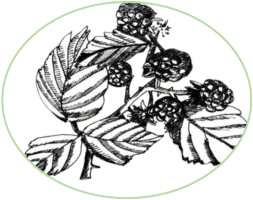
Folklore: Bramble symbolized envy in the Victorian language of flowers. To harm the bramble bush is forbidden as it is said to belong to the faerie folk; and so the first berries of the season must be left for them.
Uses: A 1771 document described brewing blackberry leaves, stem, and bark for stomach ulcers, plus in addition to their recognised culinary uses, blackberry fruit, leaves, and stems have been used to dye fabrics and hair.
General information: The bramble (or blackberry) is a fruiting shrub of the rose family. Flowers provide important forage for a number of pollinators.
Buddleia
Edible or Poisonous: Although the buddleia or butterfly bush is not particularly edible, they are no more toxic than any other garden plant, or of any greater nutritional value.
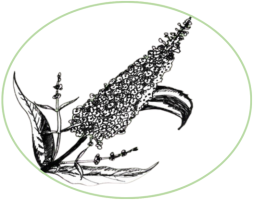
Folklore: In the Victorian language of flowers, the Buddleia was given to mean new beginnings, rebirth, and regeneration.
Uses: Buddleia plants are widely used for their wound healing, anti-inflammatory and anti-bacterial properties, often by applying dressings or compresses soaked with the leaves.
General information: Buddleia is a popular garden plant that was introduced into the UK from China in the 1890s and has now become widely naturalised on waste ground, along railway cuttings and in urban areas. Its familiar purple flowers bloom from June to October and attract all kinds of butterflies and moths looking for nectar sources.
Clover
Edible or Poisonous: Clover is edible by humans although red clover should be avoided by pregnant women.
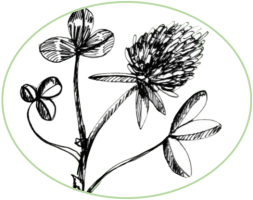
Folklore: Clover for the Victorians and many other people have been given to bring Luck. The ancient Celts believed that finding a four-leaf clover brought good fortune and warded off evil spirits. They saw the four leaves as representing the four cardinal directions, symbolizing balance and harmony in nature.
Uses: People commonly use red clover for symptoms of menopause, and it is a useful addition to animal feed or silage.
General information: Clover is a legume that fixes nitrogen in the soil through a process called nitrogen fixation. This process involves clover partnering with bacteria in nodules on its roots to convert nitrogen gas from the air into nitrates that nourish nearby plants and improve the soil.
Cow Parsley
Edible or Poisonous: Take caution! Although all above-ground parts of the cow parsley plant are edible, with a flavour sharper than garden chervil and described as grassy parsley, with a hint of liquorice or aniseed, cow parsley is a member of the umbellifer family, which includes many deathly poisonous plants, so it’s important to be absolutely sure when identifying them.
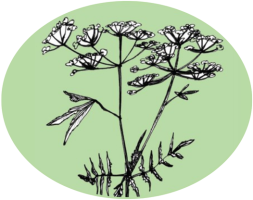
Folklore: In some parts of Britain cow parsley was colloquially known as mother-die, relating to a folklore that warned young children that their mother would keel over if the plant was taken indoors.
Uses: Due to its antidepressant properties, it can be used for insomnia and sleeplessness, aiding with stress.
General information: Nature writer Richard Mabey wrote, “Cow parsley is arguably the most important landscape flower in Britain. For nearly all of May, almost every country road is edged with its froth of white blooms.”
Daisy
Edible or Poisonous: Young leaves can be eaten raw in salads, or cooked, though the leaves become increasingly astringent with age.
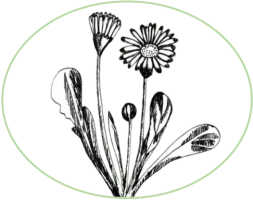
Folklore: In the Victorian language of flowers, the daisy was given to mean innocence and the ability to keep secrets In some folklore, daisies were believed to be the spirits of children who died during or soon after birth. Keeping a daisy root beneath your pillow was believed to bring back straying lovers
Uses: Daisy was used to ease aches, pains and strains in the way that people now use arnica (arnica is a type of daisy that grows in the Alps). Common daisy was known as gardeners’ friend because it was applied to relieve the aching joints of people who had been crouched down gardening all day.
General information: The word ‘daisy’ comes from the Old English dæges-eage, meaning ‘day’s eye’ due to the way that the flower opens at sunrise and close at sunset.
Dandelion
Edible or Poisonous: Not only are dandelion greens safe to eat, but they also provide a range of health benefits. All parts of a dandelion plant are edible, from the top of the yellow flower down to the roots.
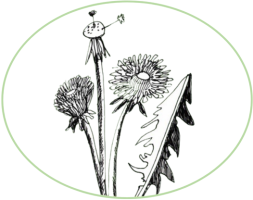
Folklore: In Victorian flower language, dandelion symbolised love. Popularly dandelion was used as a tool for divination. If you blow a seed head, the number of seeds remaining are the number of children you will have, or could be used as a device to make a wish; blow the fluffy heads away, close your eyes and make a wish.
Uses: Dandelion leaves, roots, and flowers may offer health benefits. These can include promoting liver health and fighting inflammation.
General information: The common name dandelion comes from the French dent-de-lion ‘lion’s tooth’, referring to the jagged leaves, but in addition, the French word for dandelion, pissenlit, translates to ‘bed wetting’ and may be connected to the superstition that picking dandelions makes you wet the bed. This is because dandelions have diuretic properties.
Dock
Edible or Poisonous: They have tart, lemon-tasting leaves and are used similarly in cooking.
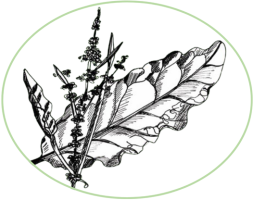
Folklore: In the Victorian language of flowers, dock was given to express patience. In Britain we tend to tell of picking a dock leaf and rubbing it on the skin to cure a nettle sting, thought there is no scientific evidence that this should work, perhaps the act of rubbing the site of the sting in itself with a cooling leaf can be of benefit.
Uses: Broad-leaved dock used to be called butter dock because its large leaves were used to wrap and conserve butter.
General information: The seed heads are an important source of food for wildlife in winter, such as birds, rodents and deer. The dark red seed heads are also decorative and can be collected for ornamental flower arrangements.
Dog Rose
Edible or Poisonous: The fruit (rose hip) is used to make syrup, tea, and jam, plus the flowers can be made into a syrup, eaten in salads, candied, or preserved in vinegar, honey or brandy. In Poland, the petals are used to make a jam that is particularly suitable for filling pączki, a type of doughnut.
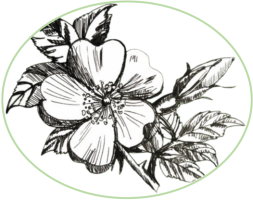
Folklore: The Victorians would give the wild rose to express simplicity in the language of flowers. It was said that when the flower petals were thrown at a vampire, it would be mystically compelled to stop what it was doing and count them. The hips were also said to protect against baneful magic and witchcraft.
Uses: The medical benefits of roses include the treatment of inflammation, diabetes, dysmenorrhea, depression, stress, seizures, and aging, and of course rose has long been used in perfumery.
General information: During the Second World War, rosehip syrup was given to children to ensure they were consuming enough vitamin C, as other fruits were harder to come by. Archaeological finds have confirmed that, along with blackberries, rose hips were eaten as early as 2,000 B.C.
Elder
Edible or Poisonous: The flowers make a cordial and the berries a jam or wine.
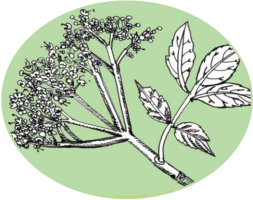
Folklore: Throughout history the elder has been regarded as quite a magical tree – the bark, leaves, flowers and berries all have medicinal properties, but of course are also known for their use in cordials, wines and jams. According to folklore, the Goddess of the Elder lives inside the tree – and she can protect you or do you harm – and so it is advised to ask permission before taking flower or fruit and to remember to thank the Goddess afterwards.
Uses: Rich in vitamin C, elderberry can be used as a tincture or syrup to help to build immunity.
General information: Mature elders can grow up to a height of 15 metres and can live for up to 60 years.
Fern
Edible or Poisonous: Though in theory some ferns are edible – they are not appetising or recommended for the home herbalist as can have some really unpleasant effects on the body, if used in the wrong way.
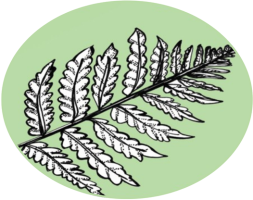
Folklore: The fern in the Victorian language of flowers was given to express sincerity. One old folklore belief was that as the ‘seeds’ (spores) of the fern are invisible, fern could be carried to become invisible.
Uses: The spleenwort fern has been used in traditional Chinese medicine to treat a range of conditions, including fever, coughs, and bronchitis. In Western herbal medicine, green spleenwort has been used as a treatment for liver and spleen disorders, as well as for rheumatism and arthritis.
General information: A small, tufted fern, maidenhair spleenwort can be found growing out of crevices between rocks and on mossy branches but particularly enjoy growing from the mortar of old walls, where the presence of lime keeps them happy.
Hawthorne
Edible or Poisonous: The ‘haws’ or fruits of the common hawthorn are edible. The leaves if picked in spring when still young, are tender enough to be used in salads.
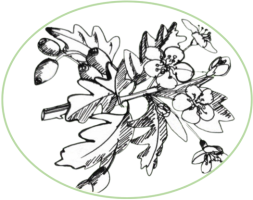
Folklore: The hawthorn has been regarded as the emblem of hope and was given to mean this by the Victorians. Hawthorn has ancient associations with May Day, with its leaves and flowers the source of May Day garlands as well as appearing in the wreath of The Green Man.
Uses: The wood of some hawthorn is hard and resistant to rot. In rural North America, it was prized for use as tool handles and fence posts. First Nations people of western Canada used the thorns for durable fishhooks and minor skin surgeries.
General information: The name haw, originally an Old English term for hedge, comes from the Anglo-Saxon term ‘haguthorn,’ meaning ‘a fence with thorns.’ The dense, thorny foliage makes fantastic nesting shelter for many species of bird.
Herb Robert
Edible or Poisonous: The plant is edible, and the leaves can be eaten fresh or steeped to make an agreeable tea.
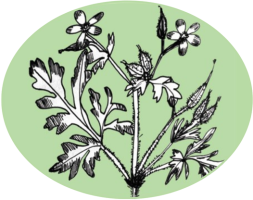
Folklore: The flower was traditionally carried for good luck and fertility. It was also associated with Robin Goodfellow, a house goblin from English folklore, and was believed to be protected by him.
Uses: Herb Robert has been used in the folk medicine of several countries, including as a treatment for diarrhoea, to improve functioning of the liver and gallbladder, for toothache and nosebleeds. Freshly picked leaves have an odour resembling burning tires when crushed, and if they are rubbed on the body the smell is said to repel mosquitoes.
General information: Though commonly known as herb Robert the same plant in Latin is geranium Robertianum and is also known as red robin, death come quickly, fox geranium, stinking Bob, squinter-pip (Shropshire) and crow’s foot.
Holly
Edible or Poisonous: While the leaves of some European species of holly are bitter and vomit-inducing, the leaves of other species are used by some in South America, to make daily tea.
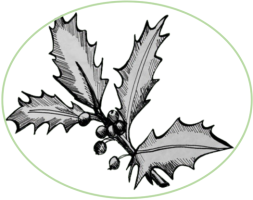
Folklore: In the Victorian language of flowers, holly was given to mean domestic bliss. Holly trees were traditionally planted near houses to offer protection from lightning. We now know that the spines on the spikey holly leaves can act as miniature lightning conductors, protecting the tree and other nearby objects from being struck.
Uses: Holly leaves were formerly used to stop sweating and an infusion of them was given in instances of catarrh, pleurisy and smallpox. 17th century Herbalist Nicholas Culpeper believed they could cure colic.
General information: In parts of Britain holly was once referred to simply as ‘Christmas’, and in pre-Victorian times ‘Christmas trees’ meant holly bushes.
Horsetail
Edible or Poisonous: As well as being harmful to cattle, sheep and livestock, the plant is poisonous to horses in both the green state and dried in hay, although not poisonous to humans.
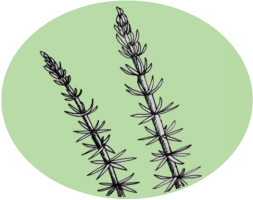
Folklore: Back when blacksmiths were closely allied with alchemists and knew some of their secrets, Horsetail was valued for giving magical strength to weapons and armour, if used to clean them.
Uses: Horsetail, being rich in silicon is great for scouring dirty pots. In days gone by this property meant it was seen as an excellent cleansing agent, which is still valued by certain craftsmen who use it as very fine sandpaper to give a fine polish to metal and precious stones
General information: Horse tail can be considered a living fossil, as it grew on the earth at the time of the dinosaurs.
Ivy
Edible or Poisonous: The berries are moderately toxic to humans, so it is not advised to consume them.
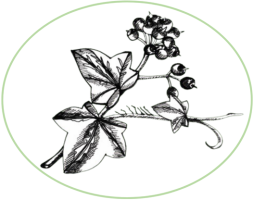
Folklore: In the Victorian language of flowers, the plant was given to mean fidelity, which is why it was traditionally a popular part of a bride’s bouquet. In ancient Rome it was believed that a wreath of ivy could prevent a person from becoming drunk, explaining why Bacchus, the god of intoxication, is usually depicted wearing an ivy crown.
Uses: Keeping ivy as a house plant can help to purify the air in your home.
General information: Often ivy will provide the last meal of the year for Queen bumblebees before hibernation, however the berries are moderately toxic to humans. Ivy bushes or ivy-wrapped poles have traditionally been used to advertise taverns, and many pubs are still called The Ivy today.
Meadowsweet
Edible or Poisonous: Similar to elderflower the meadowsweet flowers can be used to make jams, syrups and jellies or infused into cream; and have a flavour reminiscent of hay, almond, and vanilla.
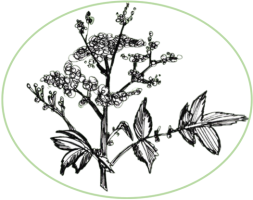
Folklore: The Victorian’s associated the flower with uselessness in the language of flowers. However, traditionally it was believed that if you have been robbed, gather meadowsweet on Midsummer to gain information on the thieves: place it on water, if it sinks the thief is a man, if it floats, a woman.
Uses: Meadowsweet has been used for millennia to treat various ailments and is the plant from which aspirin was derived.
General information: Meadowsweet was a favourite of Elizabeth I, who preferred to see it used above other herbs to cover the cold palace floors (to give warmth underfoot and to overcome smells and infections).
Moss
Edible or Poisonous: Moss is not particularly edible and may contain toxins and parasites.
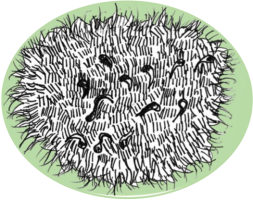
Folklore: In the Victorian language of flowers, moss was given to mean maternal love and charity. In German folklore the moss people or moss folk; a class of faerie folk, similar to elves, were said to have an intimate connection to trees and the forest.
Uses: Preindustrial uses for moss included as bedding, insulation for buildings and clothing, nappies, menstrual pads for moisture absorption and wound dressing.
General information: A passing fad for moss-collecting in the late 19th century led to the establishment of mosseries in many British gardens, though moss is often considered a weed in grass lawns today. In Japan, moss is deliberately encouraged to grow under aesthetic principles. Moss doesn’t have roots. It has rhizoids, which allow it to draw moisture and nutrients from its surface.
Nettle
Edible or Poisonous: Extremely rich in vitamins and minerals, the plant has a variety of culinary uses, in teas, soups and as an alternative to spinach in all manner of dishes.
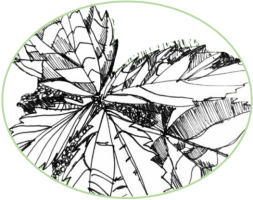
Folklore: In the Victorian language of flowers the plant was given to mean cruelty or slander. Wisdom handed down from ancient times includes advice on carrying nettle to protect oneself from lightning and to bestow courage on those who carry it.
Uses: It has been used to treat many ailments including eczema, asthma and hay fever. It also has a number of species of bugs and butterflies that rely on it as an important food plant.
General information: The irritant substance which causes the stinging sensation when the nettle is touched is a mixture of both formic acid and histamine.
Oak
Edible or Poisonous: Acorns are a good food stuff for squirrels of course, but they can also be ground up to make a coffee of sorts for humans.
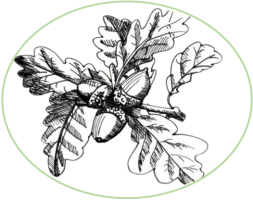
Folklore: In the Victorian language of flowers, oak was given to mean hospitality. Regarded as ‘The Tree of Life’ the oak has traditionally been thought of as a guardian, so wearing an oak leaf was thought to give protection.
Uses: Oak bark has been used by herbalists to treat inflammatory conditions such as bleeding gums and haemorrhoids, as well as varicose veins, and diarrhoea. Tannic acid derived from oak trees has a long history of application in colouring leather and making ink.
General information: An oak tree can be a host to a colossal 2,300 other wildlife species, providing vital space to eat, shelter and breed for plants, fungus, animals and birds.
Plantain
Edible or Poisonous: As a food the unopened flower heads can be eaten raw and have a taste reminiscent of raw button mushrooms. The leaves are edible but are bitter, and it is best to remove the thick veins on the ribwort variety.
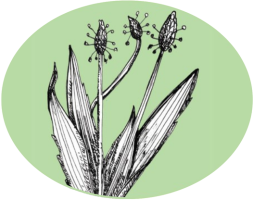
Folklore: Plantain is one of the ancient Saxons ‘Nine Sacred Herbs’. It is believed that the ‘waybread’ (Wegbrade) in the Saxons Nine Herbs Charm (an Old English spell) is plantain. In Devon it was often referred to as ‘cuckoo bread’ and it was believed that once, every seven years it changed into a cuckoo and flew away.
Uses: Plantains have been used since prehistoric times as herbal remedies. The herb is astringent, anti-toxic, antimicrobial, anti-inflammatory and an antihistamine.
General information:
Plantain actively supports local ecosystems by serving as a food source for a variety of creatures, including rabbits, birds, moths, hoverflies, and butterflies.
Rowan
Edible or Poisonous: The fruit of European rowan can be made into a slightly bitter jelly which in Britain is traditionally eaten as an accompaniment to game.
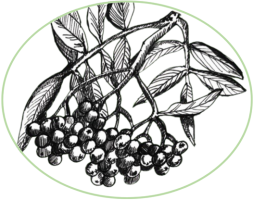
Folklore: It was thought to be a magical tree and give protection against malevolent beings, or useful in warding off witches. The tree was also called wayfarer’s tree or traveller’s tree because it supposedly prevents those on a journey from getting lost. The Druids believed the rowan tree acted as a gateway to another place, and they would drink wine made from rowan berries to get second sight.
Uses: The wood is dense and used for carving and turning and for tool handles and walking sticks.
General information: Rowan trees are very attractive to fruit-eating birds, which is reflected in the old name ‘bird catcher’. The rowan tree was associated with magic and witches because of the bright red berries, which if you look closely have a five-sided star on each.
Self-heal
Edible or Poisonous: They are edible and the mildly bitter leaves are good as salad greens.
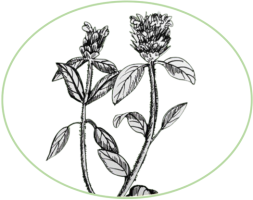
Folklore: As well as self-heal, this herb has many common names such as woundwort, heal-all, hook-heal, and carpenter’s herb, which allude to its healing properties. Self-heal was once proclaimed to be a holy herb and thought to have been sent by God to cure all ailments of men or animals and said to drive away the Devil.
Uses: Self-heal has long been used as an herb for all complaints of the mouth and throat including sore throats, tonsillitis, laryngitis, mouth ulcers, bleeding gums, and gum disease in general. Use as a gargle and as a tea, but it can also be applied externally as a compress to the neck.
General information: Self-heal is a member of the mint family and is a useful plant in a lawn for those aiming to avoid a monoculture.