A Canalside Arcana Plaque Info
Map Location 1 & 8: Celebrating our Nearby Nature
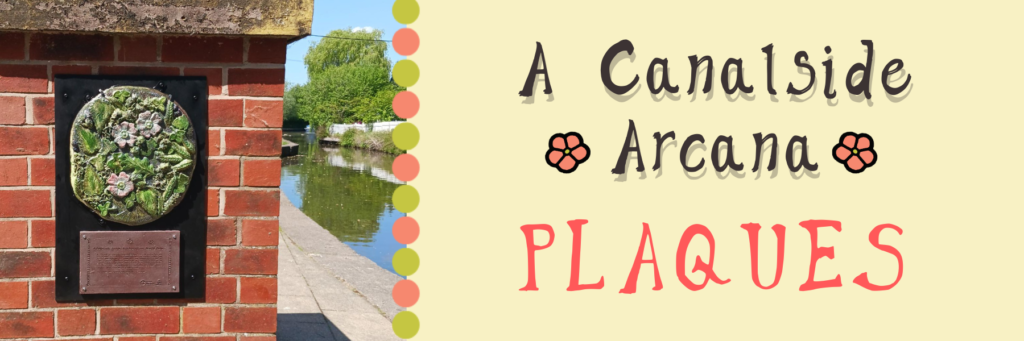
If you walk the towpath between Etruria Forge and Hanley Park you will discover a series of ceramic plaques celebrating nature, and drawing attention to the plant life and biodiversity of one of Stoke-on-Trent’s important waterways. A Canalside Arcana is an artwork and trail by artist Anna Francis which reveals the secret folk stories, uses and biological information about the plants, flowers and trees living alongside the Caldon Canal.
The plaque at Etruria was created with residents of Etruria.
The plaque at Hanley Park was created with members of Staffordshire Sight Loss.
Map Location 2: Oak
Edible or Poisonous: Acorns are a good food stuff for squirrels of course, but can also be ground up to make a coffee of sorts.
Folklore: Oak came to represent hospitality in Floriography – the Victorian language of flowers – and the ancient Celts believed that the oak tree was a portal to other worlds.
Uses: Tannic acid derived from oak trees has a long history of application in tanning hides and making ink.
General Information: An oak tree can be a host to a colossal 2,300 other wildlife species, providing vital space to eat, shelter and breed for plants, fungus, animals and birds.
Map Location 3: Bramble or Blackberry
Edible or Poisonous: Brambles are one of our most popular edibles for foraging, often picked in late summer to early autumn.
Folklore: To harm the bramble bush is forbidden as it belongs to the faerie folk and the first berries of the season must be left for them.
Uses: Bramble is a great source of vitamin C and used to be used to treat scurvy.
General Information: The Bramble flowers provide important forage for a number of pollinators.
Map Location 4: Ivy
Edible or Poisonous: Ivy is mildly poisonous if eaten, and may cause an upset stomach if consumed.
Folklore: In the Victorian language of flowers the plant was given to mean fidelity, which is why it was a popular part of a bride’s bouquet.
Uses: Keeping ivy as a house plant can help to purify the air.
General Information: Often Ivy will provide the last meal of the year for Queen Bumblebees before hibernation.
Map Location 5: Rose (wild or dog)
Edible or Poisonous: Rose hips and petals are edible and contain antioxidants and are high in vitamin C and A.
Folklore: The Victorians would give the wild rose to express simplicity in the language of flowers.
Uses: Rose has many uses: in foods and syrups, perfumes and to settle an upset stomach.
General Information: During the Second World War, rosehip syrup was given to children to ensure they were consuming enough vitamin C, as other fruits were harder to come by.
Map Location 6: Fern
Edible or Poisonous: It is not recommended to eat fern as some can be toxic, and the home herbalist should be wary of attempting to us the fern for medicinal reasons.
Folklore: In the Victorian language of flowers the plant was given to mean fascination, sincerity, and magic. One old folklore belief was that as the ‘seeds’ (spores) of the fern are invisible, they can be eaten or carried to become invisible.
Uses: They have been the subject of research for their ability to remove some chemical pollutants from the atmosphere.
General Information: The Victorians had a real craze for fern plants, known as pteridomania, with decorative fern shapes and patterns appearing on all manner of objects and buildings.
Map Location 7: Nettle
Edible or Poisonous: Extremely rich in vitamins and minerals, the plant has a variety of culinary uses, in teas, soups and as an alternative to spinach.
Folklore: In the Victorian language of flowers the plant was given to mean cruelty or slander.
Uses: Nettle is an important food plant for a number of species of bugs and butterflies.
General Information: The irritant substance which causes the stinging sensation when the nettle is touched is a mixture of both formic acid and histamine.